
Play is often viewed as a break from learning, something children do after responsibilities are finished. In reality, play is one of the primary ways children develop problem-solving skills and independence. Through play, children test ideas, assess risks, and learn how to respond when things do not go as planned. These lessons are rarely taught directly. They emerge naturally from experience.
Much of this learning happens quietly, without adult instruction or structured outcomes. The home environment, where children feel most at ease, plays a significant role in allowing this process to unfold.
Play as a form of self-directed learning
When children play freely, they make decisions constantly. They choose what to do, how to do it, and when to change direction. Each decision requires some level of reasoning, even if it is instinctive.
A child deciding how to climb, where to step next, or how to reach an object is engaging in problem-solving. If one approach does not work, they adjust. This trial-and-error process is one of the foundations of independent thinking.
Unlike formal learning, play does not come with a clear right or wrong answer. This lack of pressure encourages experimentation and persistence.
How physical play supports mental flexibility
Physical play often involves unpredictability. Surfaces feel different, movements require adjustment, and outcomes are not always certain. These variables require children to stay mentally flexible.
As children navigate physical challenges, they learn to assess situations quickly. They begin to recognise patterns, anticipate consequences, and modify their actions. Over time, this builds confidence in their ability to handle unfamiliar situations.
This flexibility carries into other areas of life. Children who are comfortable adapting during play are often better equipped to adapt socially and emotionally as well.
Independence grows through managed risk
Independence does not develop in environments that are entirely risk-free. It grows when children encounter manageable challenges and learn to handle them. Play provides these opportunities in a natural way.
When children are allowed to take small risks, they learn to judge their own abilities. They begin to understand what feels safe, what feels difficult, and when to ask for help. This self-awareness is an important part of becoming independent.
Overprotective environments can limit these experiences. While safety is essential, removing all challenge can slow the development of confidence and decision-making skills.
The role of repetition in skill building
Children often repeat the same activities during play. This repetition is not boredom. It is practice. Each attempt reinforces learning and refines technique.
Through repetition, children gain mastery. What once required concentration becomes automatic. This sense of progress is deeply motivating and encourages further exploration.
Repeated play experiences also help children recognise cause and effect. They learn that different choices lead to different outcomes, strengthening their problem-solving abilities.
Play within familiar environments
Children tend to take more initiative in familiar spaces. At home, they feel secure enough to try things without fear of judgment. This security allows them to focus on the challenge itself rather than external expectations.
Familiar environments also provide consistent reference points. Children remember what worked before and apply that knowledge to new situations. This continuity supports deeper learning over time.
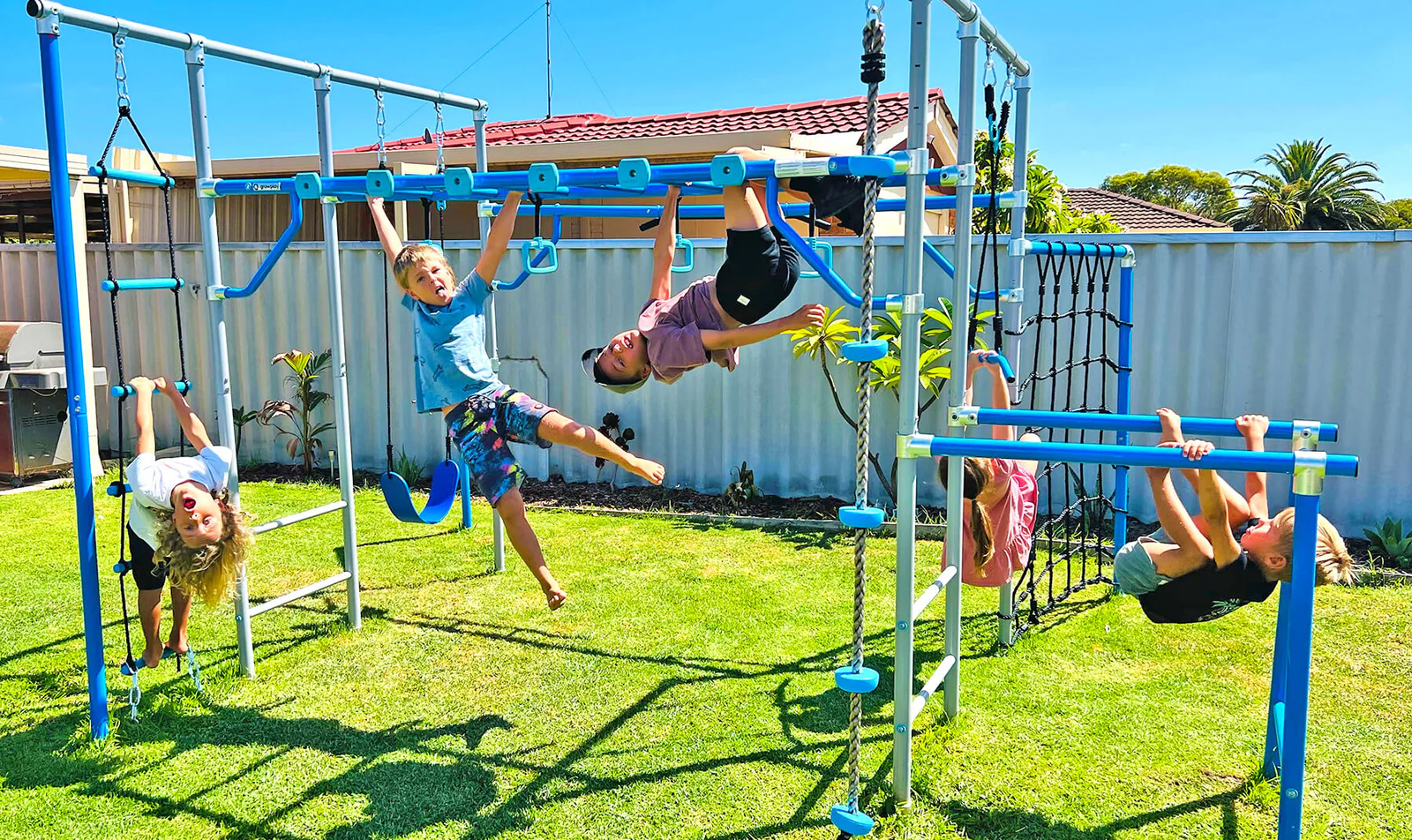
In many households, everyday play features such as monkey bars are simply part of the background, offering occasional physical challenges without becoming a structured activity. Used this way, they support exploration rather than performance.
Social problem-solving through shared play
When play involves others, problem-solving takes on a social dimension. Children negotiate roles, resolve conflicts, and adapt to different personalities. These interactions require empathy, communication, and compromise.
Shared play teaches children that problems do not always have simple solutions. They learn to listen, respond, and adjust their approach based on feedback from others.
These experiences are essential for developing independence in social settings. Children who navigate shared play confidently are often more comfortable expressing themselves and handling disagreement.
Unstructured play encourages creativity
Structured activities have clear rules and outcomes. Unstructured play, by contrast, leaves space for imagination. Children invent scenarios, create challenges, and define their own goals.
This freedom encourages creative problem-solving. Children learn to generate ideas rather than follow instructions. They explore possibilities and develop original solutions.
Creativity developed through play often translates into flexible thinking later in life. Children become more comfortable approaching problems from multiple angles.
When adults step back
Adults play an important role in supporting play, but stepping back is sometimes just as important as involvement. Constant direction can interrupt the learning process.
When adults observe rather than intervene, children have the opportunity to work through challenges independently. This does not mean ignoring safety concerns. It means allowing children the space to think, adjust, and persist.
This balance helps children develop trust in their own abilities.
Long-term impact of playful problem-solving
The skills developed through play do not disappear as children grow older. Problem-solving, adaptability, and independence formed during early years influence how children approach challenges later on.
Children who have had opportunities to explore freely tend to show greater resilience. They are more willing to try, fail, and try again. These qualities support learning, relationships, and emotional wellbeing.
Play lays the groundwork for these traits in a way that feels natural and enjoyable.
Supporting growth through everyday play
Encouraging play does not require elaborate planning or constant stimulation. It involves providing space, time, and permission for children to explore.
When homes support everyday play experiences, children gain opportunities to develop problem-solving skills and independence without pressure. These lessons unfold gradually, shaped by curiosity and experience rather than instruction.
Over time, the impact of these subtle experiences becomes clear. Children grow into individuals who trust their abilities, approach challenges with confidence, and carry the lessons of play into all areas of life.
