
HBOT has solid evidence for a short list of conditions, including skin grafts and flaps in trouble. For routine cosmetic recovery, the research is promising but still early. Here’s how to weigh it.
Hyperbaric oxygen therapy (HBOT) means breathing nearly pure oxygen inside a pressurized chamber, which raises oxygen levels in your blood and tissues. The FDA has cleared hyperbaric chambers for a specific list of conditions, including compromised skin grafts and flaps and certain non-healing wounds. Using HBOT to support routine cosmetic recovery is an emerging, off-label use with encouraging early studies but no large trials yet.
Hyperbaric chambers are used to live mostly in hospitals and dive medicine centers. Now they appear in wellness studios, athletic recovery lounges, and some plastic surgery practices. If you’re planning a facelift, tummy tuck, or liposuction, you may be wondering whether hyperbaric oxygen therapy after surgery could help you heal faster or whether it’s just an expensive hour in a tube.
The evidence gives a clear answer for some uses and an honest “maybe” for others. This guide explains how HBOT works, where the science is strong, where it’s still developing, and how to decide if it belongs in your recovery plan. It reflects the approach of board-certified plastic surgeon Dr. Siamak Agha at The One Plastic Surgery Center in Newport Beach, where HBOT is offered as an optional adjunct to standard aftercare.
How Hyperbaric Oxygen Therapy Works
During HBOT, you breathe close to 100 percent oxygen while the air pressure around you is raised above normal. The higher pressure allows far more oxygen to dissolve into your blood plasma, which can reach tissues with limited circulation. Oxygen is essential for wound repair, collagen formation, new blood vessel growth, and fighting infection.
Surgery temporarily disrupts blood flow in the treated area. Tissue that’s been lifted, tightened, or moved, such as a facelift or tummy tuck flap, can have a reduced oxygen supply while it heals. The idea behind HBOT is to deliver extra oxygen during that vulnerable window.
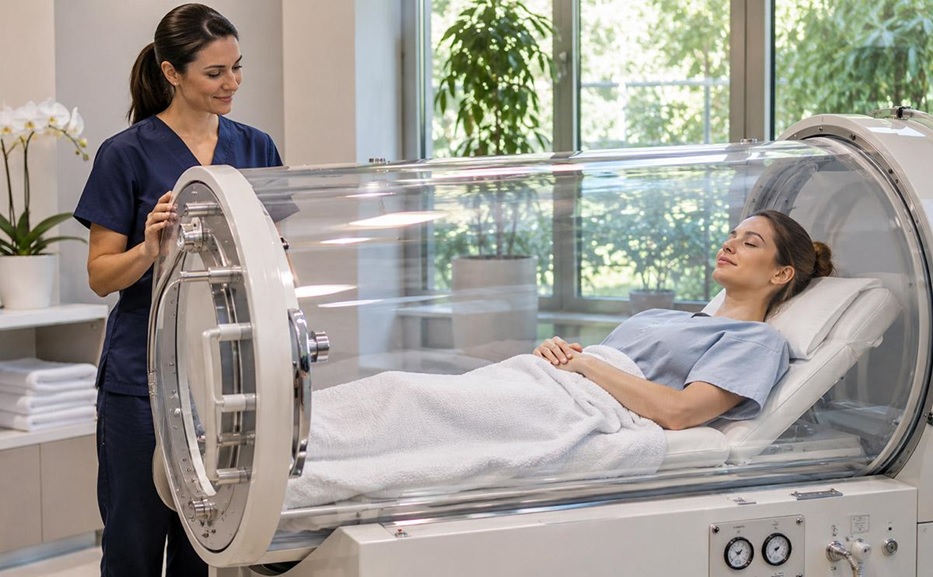
A session typically lasts 60 to 120 minutes. You’ll lie or sit in a clear, single-person chamber or a larger multi-person room. As pressure increases, your ears may feel full, similar to descending in an airplane, and you’ll be taught how to clear them. You can learn more about how hyperbaric oxygen therapy works and what to expect during a session.
What the FDA Has Cleared HBOT For
The FDA has cleared hyperbaric chambers for a specific list of conditions. These include decompression sickness, carbon monoxide poisoning, severe anemia, serious skin and bone infections, radiation injury, certain non-healing wounds such as diabetic foot ulcers, and skin grafts or flaps at risk of tissue death.
The compromised graft and flap indication is the most relevant to plastic surgery, and it has strong backing. Hospital programs such as UCLA Health’s hyperbaric medicine service list compromised grafts and flaps among their established indications. In these cases, HBOT is used to rescue tissue that’s struggling to survive.
The FDA’s consumer guidance also warns that HBOT has not been proven to treat many conditions promoted online, and it advises patients to use facilities that are properly accredited.
For a skin flap in trouble, HBOT is established medicine. For routine recovery, the evidence is still inconclusive.
Hyperbaric Oxygen Therapy After Cosmetic Surgery: The Evidence So Far
For routine plastic surgery recovery, such as an uncomplicated facelift or liposuction, HBOT is an off-label adjunct. Early studies report faster wound healing and favorable recovery in some patients, but they’re small, and reviewers have called for larger, standardized trials before drawing firm conclusions.
The studies that exist are encouraging. Research cited by Dr. Agha’s practice includes a 2023 facelift study that reported shorter average wound-healing time with HBOT, a 2024 patient cohort with favorable recovery observations, and a 2025 review that described HBOT as a promising adjunct while calling for stronger standardized trials.
What patients hope for is less swelling and bruising, faster incision healing, and a lower chance of wound problems. Those benefits are plausible based on how oxygen supports healing, but the research hasn’t yet shown how much difference HBOT makes for typical, healthy patients. That’s why an honest provider will present it as a potential support, not a guarantee.
Which Plastic Surgery Patients May Benefit Most
HBOT is most relevant for procedures that create large skin flaps or depend on healthy blood supply and for patients whose healing may be slower than average. Your surgeon can tell you whether it makes sense for your specific procedure and health history.
Procedures where HBOT is most often discussed include:
- Facelifts and neck lifts, where skin is lifted over a wide area
- Tummy tucks and body lifts, which involve long incisions and large flaps
- Liposuction and fat transfer, where grafted fat depends on new blood supply to survive
- Breast lifts and reductions, especially combined procedures
- Extensive or combined surgeries, such as a mommy makeover or post-bariatric body contouring
Patients with factors that can slow healing, such as a history of smoking, diabetes, previous radiation, or prior surgery in the same area, are sometimes considered stronger candidates. HBOT doesn’t cancel those risks, so quitting smoking and controlling blood sugar still matter most.
How HBOT Is Used at The One Plastic Surgery Center
Dr. Agha’s practice offers HBOT for plastic surgery recovery in a medical-grade chamber that reaches up to 2.0 ATA (atmospheres absolute). It is presented as an adjunct to postoperative care, not a replacement for it, and the practice’s own overview notes that the evidence in aesthetic surgery is still developing.
When it’s recommended, treatment may begin with one to three sessions in the days before surgery, though pre-surgery sessions aren’t required for every patient. After surgery, a typical course is about five to ten sessions, with fewer for smaller procedures and more for comprehensive ones. Facial surgery patients may begin the day after surgery, once cleared, while body contouring patients often start around day three to five. Sessions can take place with surgical drains in place when the team considers it appropriate.
The practice also offers hyperbaric oxygen therapy in Newport Beach outside of surgical recovery, but for surgical patients, sessions are coordinated with your aftercare plan and follow-up visits.
Risks and Who Should Be Cautious
HBOT is generally safe under medical supervision, but it isn’t risk-free. Common issues include ear and sinus pressure, temporary changes in vision, fatigue, and claustrophobia. Rare but serious risks include lung injury from pressure changes and oxygen-related seizures. Some lung conditions and medications make HBOT unsafe.
A medical policy review from Blue Cross Blue Shield of Michigan estimates the overall adverse event rate at about 0.4 percent. Tell your team about colds, sinus congestion, ear problems, lung disease, recent chest surgery, seizure history, pregnancy, and all medications you take before your first session.
It’s also worth knowing the difference between medical and wellness chambers. Soft-sided, zip-up “mild hyperbaric” chambers marketed for wellness typically operate at much lower pressure than medical chambers, as Parkview Health explains. They shouldn’t be confused with the treatment studied for wound healing.
Questions to Ask Before Adding HBOT to Your Recovery
- Is HBOT recommended for my procedure and health history, or is it optional?
- What pressure, session length, and number of sessions do you use, and why?
- Who supervises the sessions, and what training do they have?
- When would I start, and can I go in with drains or dressings?
- What does it cost, and is any of it covered by insurance?
HBOT works best as a supporting player in a strong recovery plan, not as a shortcut.
The Bottom Line on Hyperbaric Oxygen Therapy After Surgery
Hyperbaric oxygen therapy has strong support when a skin graft or flap is struggling and for certain hard-to-heal wounds. For everyday cosmetic recovery, it’s a reasonable option to discuss, backed by encouraging early studies but not yet by large trials. If you choose it, use a medically supervised program, share your full health history, and continue following your surgeon’s standard aftercare.
Ready to find out if HBOT is right for your plastic surgery recovery? Schedule a consultation with board-certified plastic surgeon Dr. Siamak Agha at The One Plastic Surgery Center in Newport Beach to discuss your goals and options.
Frequently Asked Questions
Does hyperbaric oxygen therapy speed healing after surgery?
HBOT has strong evidence for compromised skin grafts and flaps and certain chronic wounds. For routine cosmetic surgery, small studies suggest benefits such as faster wound healing, but larger trials are still needed.
Is HBOT FDA-approved for plastic surgery recovery?
The FDA has cleared hyperbaric chambers for specific conditions, including compromised skin grafts and flaps. Using HBOT to support routine cosmetic recovery is considered off-label.
How many HBOT sessions are typical after plastic surgery?
It varies by procedure and provider. At The One Plastic Surgery Center, a typical postoperative course is about five to ten sessions, with fewer for smaller procedures and more for extensive ones.
What are the side effects of hyperbaric oxygen therapy?
Ear and sinus pressure are most common, along with temporary vision changes, fatigue, and claustrophobia. Serious problems such as lung injury or oxygen-related seizures are rare.
Are mild hyperbaric chambers the same as medical HBOT?
No. Soft, zip-up chambers used in many wellness settings operate at much lower pressure than medical chambers and haven’t been studied the same way for wound healing.
Medical disclaimer: This article is for educational purposes only and is not medical advice. Results and candidacy vary by patient, and a consultation with a qualified plastic surgeon is required to determine whether HBOT is appropriate for your recovery.
